In Hungarian, the accusative case is usually formed by adding -t:
könyv → könyvet; alma → almát; autó → autót
However, a group of words change their stem before adding -t.
1. Words ending in -elem / -alom
történelem → történelmet; irodalom → irodalmat; szerelem → szerelmet; forgalom → forgalmat; izgalom → izgalmat; félelem → félelmet; türelem → türelmet
2. Final vowel drop
étterem → éttermet; eper → epret; tükör → tükröt; dolog → dolgot; cukor → cukrot; szobor → szobrot; sarok → sarkot
3. Stem vowel change
tér → teret; kéz → kezet; név → nevet; levél → levelet; madár → madarat; út → utat; tűz → tüzet; híd → hidat; szél → szelet; egér → egeret; kenyér → kenyeret; tenyér → tenyeret
4. The hidden -v-
Usually found in monosyllabic words ending in a long vowel:
mű → művet; ló → lovat; fű → füvet; kő → követ; tó → tavat; hó → havat; szó → szavat (in modern usage, szót is more common); cső → csövet
What to keep in mind
These stem changes usually carry over into other forms — the plural and possessive endings follow the same pattern. It is therefore useful to learn words in “families” from the start:
név → nevet → nevek → nevem; mű → művet → művek →művem; tó → tavat → tavak → tavam
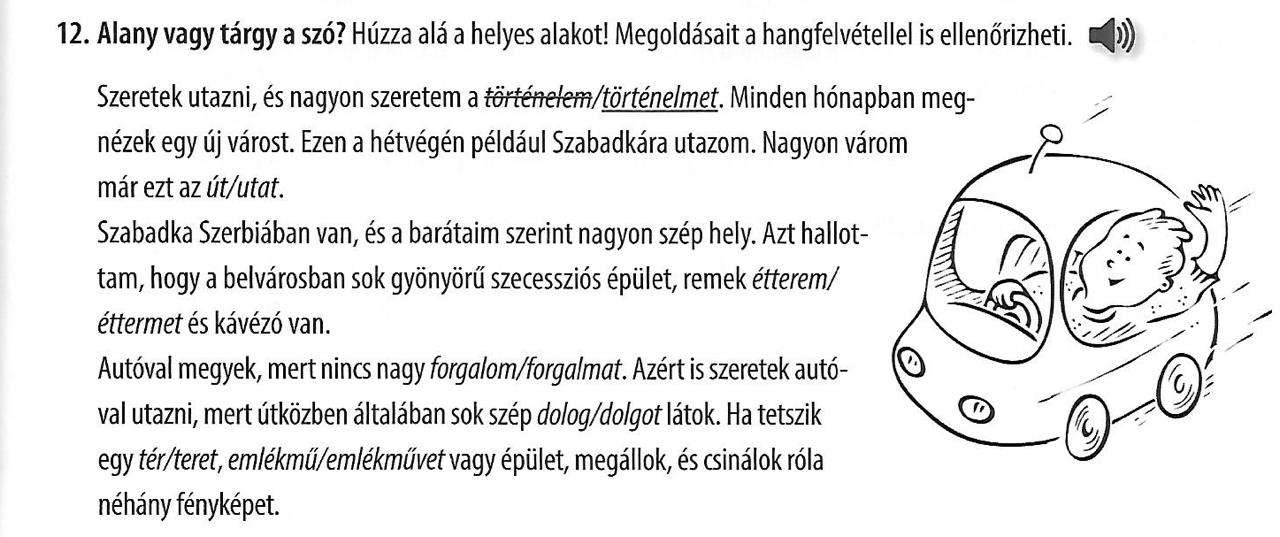
Practice: a text about Szabadka
Our sister channel Balkán csárda published a post about ways to travel from Hungary to Serbia — and the city of Subotica came up. In Hungarian it is called Szabadka: the city was part of the Kingdom of Hungary for a long time, which is why many places outside modern-day Hungary still have their own Hungarian names.
Read the text about Szabadka from the MagyarOK A1+ textbook and pay attention to the word forms — jó olvasást! 📖