Nádasdy Ádám is a Hungarian linguist, translator, poet and essayist — one of the most prominent contemporary popularisers of the Hungarian language. He is known for writing about complex linguistic questions in a lively, accessible and ironic style, free of academic dryness. In his essays and talks he reflects not so much on language itself as on culture, society, everyday life and its changes.
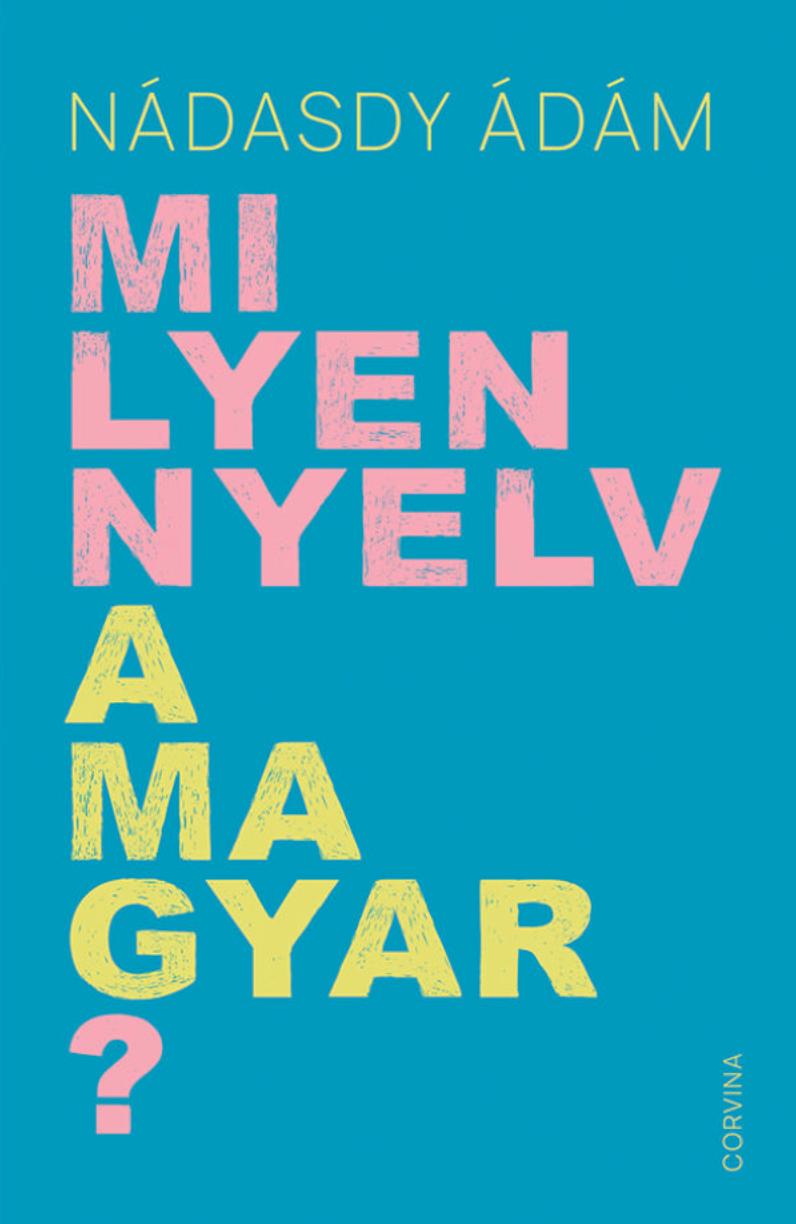
Below is an excerpt from his book «Milyen nyelv a magyar?» (“What kind of language is Hungarian?”).
Around 20% of Hungarian speakers — one in five — live outside Hungary. This is almost unparalleled in Europe. It is also interesting that Hungarians for centuries considered themselves Turks or Huns, and many features point in that direction — except one: language. Hungarian is neither Turkic nor Hunnic, but Finno-Ugric. This raises the question: why does a people who consider themselves Turkic speak a Finno-Ugric language?
From a European perspective, Hungarian vocabulary seems “exotic”: most words bear no resemblance to Western European or Slavic lexicons. Italian, for example, reflects the shared European vocabulary well: teatro — theatre, violino — violin, cammello — camel, geografia — geography. Most Europeans will understand these words, but not their Hungarian equivalents. However, this only applies to Europeans: for a Chinese speaker, violino is no more transparent than hegedű (“violin”), and teatro no clearer than színház (“theatre”). So Hungarian vocabulary is unusual only in the European context, not in a global one.
But it is not just the words: the grammatical structure of Hungarian also differs from most European languages. Consider the first line of the Hungarian national anthem compared with a literal English translation:
Isten áldd meg a magyart (“God, bless the Hungarian”)
Hungarian has the word meg here — a so-called verbal prefix (igekötő) that most languages lack. Its functions are varied; in this case it expresses the completeness of the action. The use of such prefixes is considered one of the beauties — and one of the difficulties — of Hungarian.
Now look at the second line of the anthem:
jókedvvel, bőséggel (“with good cheer, with abundance”)
Where English uses the preposition with, Hungarian uses suffixes (-vel, -gel). Hungarian has virtually no prepositions in the conventional European sense — their role is played by case suffixes.
The order of names in Hungarian is more of a cultural-historical feature than a purely linguistic one: the family name comes first, followed by the given name. Hence: Liszt Ferenc, Bartók Béla, Márai Sándor. Even Freud was once referred to as Freud Zsigmond. Interestingly, Finnish and Estonian — which are related to Hungarian — follow the standard European order, whereas unrelated Chinese and Japanese use the same name order as Hungarian.
Of course, some Hungarian sentences are quite easy for Europeans to understand, for example:
A szimfónia romantikus melódiákat kombinál. (“The symphony combines romantic melodies.”)
This sentence consists almost entirely of words of Greek-Latin origin common to many languages. Does that make it not really Hungarian? No — it is Hungarian, thanks to its grammar. The Hungarian elements are the article a, the suffix -l in the verb kombinál, and the double ending -k-at in melódiákat, which simultaneously marks plural and accusative. The word order is also characteristic: the adjective (romantikus) precedes the noun and is not inflected. One does not say romantikusakat melódiákat, as would be the case in Latin or Czech.
So even when a sentence is built from “foreign” words, its structure remains distinctly Hungarian. A language is defined not by its vocabulary, but by its structure!