

Rohadt is far from the only word that adds emotional punch to a phrase. Colloquial Hungarian has a whole set of intensifiers — they can mean “very”, “really”, “awfully”, or “bloody brilliant”, depending on context and tone.
Baromi — “incredibly”, “awfully” (literally related to barom — “beast”, “cattle”):
baromi jó — damn good; baromi drága — awfully expensive
Tök — a softer, safer “very” or “completely” (literally tök — “pumpkin”):
tök jó — really great; tök mindegy — completely doesn’t matter, couldn’t care less
Iszonyú — literally tied to horror and fear, but in everyday speech it works for both bad and good things:
iszonyú meleg van — it’s terribly hot; iszonyú jól néz ki — looks incredibly good
And of course, we can’t skip kurva. Literally a coarse word, but in colloquial speech it’s often used as a very strong intensifier. Worth understanding, but best not to experiment with it yourself:
kurva hideg van — it’s freaking freezing; kurva jó volt — it was freaking amazing
! Note: all these words go before an adjective or adverb — just like English “very”, “terribly”, “really”.
Practice
Karácsony Gergely — a politician and mayor of Budapest. On Father’s Day, he posted on Facebook:
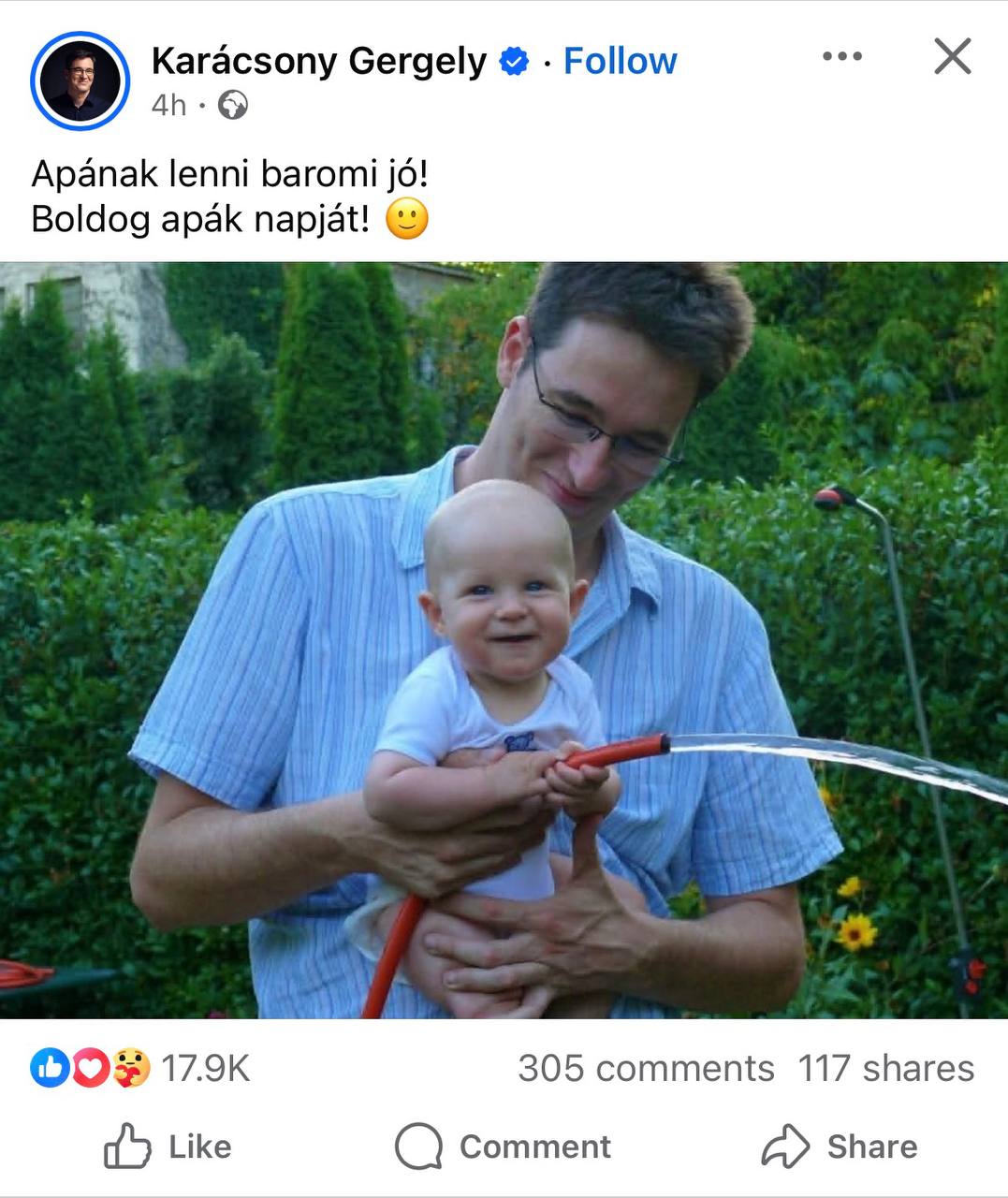
Apának lenni baromi jó! Boldog apák napját! 🙂
Being a father is incredibly good! Happy Father’s Day!